
Reu Wilde Interview: Slot Maths, RTP and Player Trust
A slot’s RTP tells you something about its maths, but how much does it reveal about the experience of playing it? We caught up with Jinx Gaming’s Reu Wilde to discuss win distribution, observed returns, and what players should know beyond a volatility label. Along the way, he explains why good reviews don’t always mean commercial success and takes aim at some familiar industry habits.

1. Two slots can advertise almost identical RTPs and still feel completely different to play. When you’re designing a game, which decisions about how wins are distributed have the biggest effect on that experience?
RTP tells you remarkably little about what a game actually feels like. Two films can have the same running time. Doesn’t mean you’re getting the same evening.
The biggest decisions are how often wins happen, how big those wins tend to be, and how much of the return sits in the base game versus the bonus. Are you getting regular wins that give you something back, or lots of tiny hits that make a noise but barely cover the bet? Does the base game have teeth, or is it essentially a waiting room for the feature? And when that feature arrives, does it usually deliver something fairly consistent, or can it swing from a wet fart to an absolute monster?
Even two games described as “high volatility” can feel miles apart. If you put too much of the return into an incredibly rare maximum win, that money has to come from somewhere. You can’t spend the same RTP twice, however exciting the marketing department finds the number.
At Jinx, the maths has to carry the idea. If we’re putting you into a fight with a monster, the distribution of wins needs to give that fight some tension and progression. And that doesn’t mean you need to win every fight, but it needs to feel like you might win the next one.
The animation can sell a punch, but the maths decides whether it lands. Otherwise you’ve just put a very expensive cartoon over a spreadsheet.
2. At CasinoTrackpot, we track observed RTP over different periods alongside the theoretical figure. If you were looking at those figures for one of your own games, what would you want to know about the underlying data before drawing any conclusions?
First question: how many spins are we actually talking about? “Over the last month” sounds substantial, but a month isn’t a sample size. That could mean a few thousand spins or a few million, and those tell very different stories.
Then I’d want to know which RTP version you’re tracking, whether it’s real-money play, and whether standard spins, bonus buys and any other bet modes are mixed together. You need to know what’s in the bucket before you start explaining why it smells funny.
I’d also look at the stakes. If you’re calculating observed RTP from total money won divided by total money wagered, one player betting enormous amounts can have far more influence than thousands of players on smaller stakes. Has a massive win moved the figure? Has one high-stakes session dominated it? Those are quite useful things to know before someone declares the maths broken.
And I’d want to understand how the data is collected. Is it a complete record of play from a defined source, or a selection of sessions? A million spins collected selectively can still give you a misleading picture.
Observed RTP is useful, but it needs context. A high figure doesn’t mean the game has suddenly become generous, and a low figure doesn’t automatically mean something’s wrong. I’d want to know whether the result sits within the range we’d expect from that game’s maths and that amount of play. Otherwise we’re just looking at a number and giving it a personality.
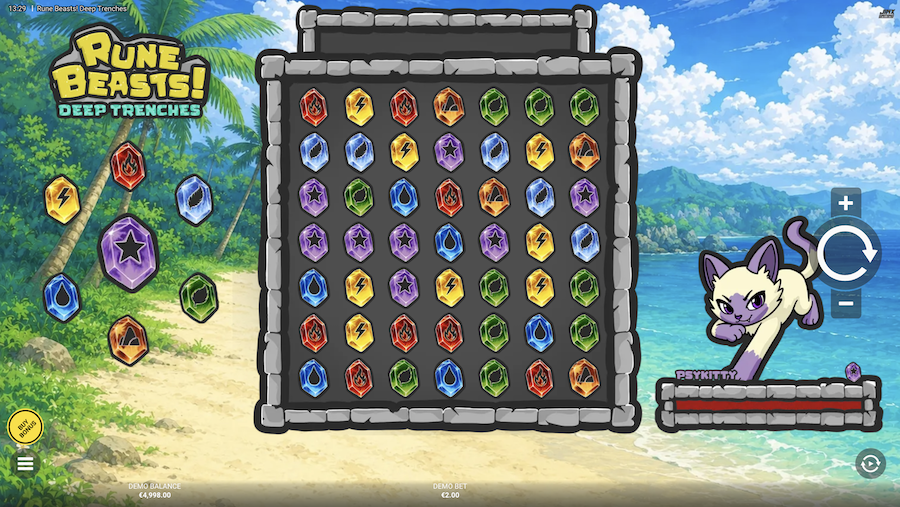
3. In Rune Beasts! Deep Trenches it has RTP configurations of 96.29%, 94.29% and 92.31%. When you create lower-RTP versions, what changes behind the scenes, and how do you assess whether each version still delivers the experience you intended?
There isn’t a “make it pay less” button. Well, there probably could be, but I wouldn’t want that person designing our games.
A lower RTP means reducing the average return, but where you take that return from matters enormously. Depending on the model, you can change the probabilities of certain outcomes, the distribution of win sizes, how often features happen, or what those features tend to pay. Those choices can produce the same headline reduction and very different experiences.
For Deep Trenches, the thing we need to protect is its identity as the lower-volatility Rune Beasts game. If a configuration technically hits its target RTP but loses that character, we haven’t finished the job.
So the assessment has to go beyond checking the final percentage. You look at hit frequency, the spread of wins, bonus frequency and bonus returns, alongside simulations and actual playtesting. How often does the player get a meaningful result? Are there longer stretches where nothing much happens? Do the beast battles still have the rhythm we designed them around?
And we shouldn’t pretend the versions are identical. A lower theoretical return is a real difference; you can’t art-direct those percentage points back into existence. Our job is to understand where that difference shows up and assess whether the game still delivers the experience its name is promising.
4. “High volatility” covers a huge range of games, yet players rarely get much more detail than that label. What information would you like studios to disclose so people could better understand the risk before placing a bet?
I’d like to see more explanation of a game’s personality. “High volatility” gives you a broad idea, but it covers everything from a lively afternoon to being launched through a window.
For me, the useful detail is where the action sits. Is there decent potential in the base game, or is most of it concentrated in the bonuses? Do those bonuses tend to deliver more consistent results, or are they capable of going completely feral? And how much of the headline potential sits in exceptionally rare outcomes?
That’s something studios can make interesting through game guides, demos and conversations like this. We’re usually very happy to explain the thought behind our mechanics. We can bring some of that enthusiasm to explaining the maths underneath it.
It’s part of why we’ve taken Rune Beasts in two directions with Sharp Peaks and Deep Trenches. The intention is to give players a clearer choice between two different experiences within the same world.
You’ll never turn a volatility label into a prediction of someone’s session. But you can give people a better sense of whether a game sounds like their sort of thing. There’s room to do that with a bit of personality, rather than making the game description read like the instructions for a boiler.
5. Bonus buys and enhanced bets give players several ways into the same game. How does offering those options affect the maths and development process, and how do you make sure the ordinary base game still stands on its own?
They’re a significant part of how our players actually play. We can have all the creative ambition in the world, but Jinx is still a business. The radioactive goo doesn’t pay for itself.
In the markets where we perform best, bonus buys and enhanced bets are a key part of the commercial picture. They help us monetise the experiments, fund the team and give us the freedom to make the next weird idea. There’s a fairly direct relationship between “people paid to play this” and “we get to make another one”.
From a maths perspective, each option needs proper consideration. A bonus buy gives you direct access to a feature at a defined price, so its returns need to be assessed against that price. An enhanced bet changes what you’re paying and the probabilities or features attached to it. You have to understand the distribution of outcomes for each route, then build and test the implementation properly. It’s more than sticking another button beside spin.
But the ordinary base game still needs a reason to exist beyond advertising the buy menu. For us, that means the core idea needs to be present in normal play. In Rune Beasts, you’re already fighting beasts in the base game. You’re getting the thing we put on the poster.
Different players want different ways in, and we’re happy to accommodate that. But if someone chooses ordinary spins, they should still feel like they’re playing the game we were excited to make.
6. Once a game goes live, what evidence tells you it has actually worked? Have you ever had player feedback and commercial performance tell you two very different stories about the same release?
Commercially, people choosing to play it and coming back matters. Creatively, I want to know whether it’s become someone’s favourite. Those two things have a much better relationship than whether everyone agrees it’s quite nice.
We’ve come to terms with being a Marmite studio. Our games divide critics, and we’re comfortable with that. If one person loves it and another thinks we’ve lost our minds, there’s probably something worth looking at.
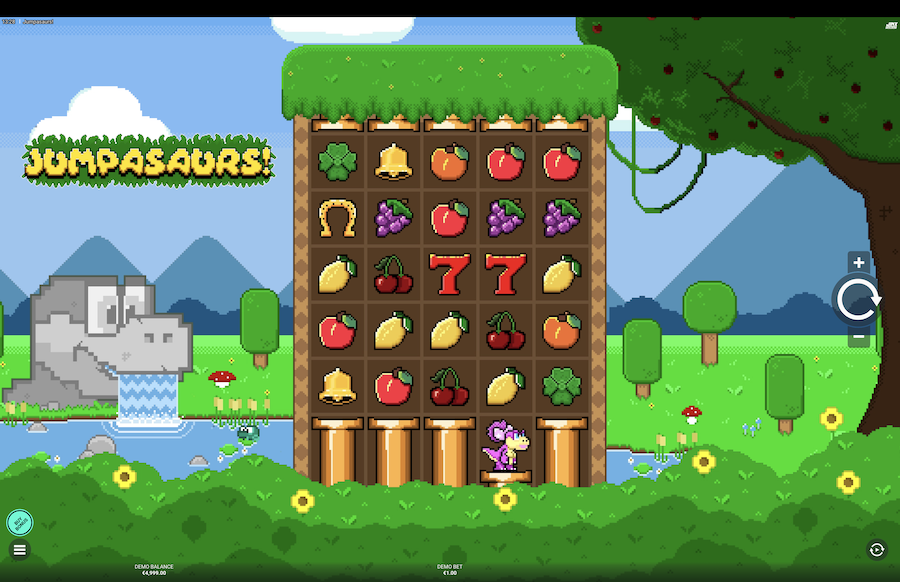
Jumpasaurs was our most consistently well-received game. Everyone seemed to like it. It was also our weakest commercial performer. My reading of that is: everyone liked it, but nobody really loved it. We’d made something people could agree on, but agreement doesn’t pay the wages.
I’d rather give a particular group something they absolutely love, even if everyone else leaves it alone. For us, that’s a better business model than trying to get a polite nod from the entire room.
So when a couple of critics really connect with a game, that’s a useful signal. It suggests we’ve found an audience whose tastes it speaks to. The commercial results then help us understand whether that carries through into actual play.
And those same critics might hate the next one. That’s fine. Someone who loves shooting zombies doesn’t automatically want to collect fantasy beasts. We want each game to find its people.
We’ve still only released three games, so these are early observations rather than scientific laws. Rune Beasts will give us more to work with, including a couple of experiments we’re keeping to ourselves for now. Got to leave something for the competitors to figure out.
7. You’ve invited us to ask about your light-hearted jabs at the industry, so let’s finish there. Which habit or claim in the slots business most deserves a public roasting, and what would you like to see replace it?
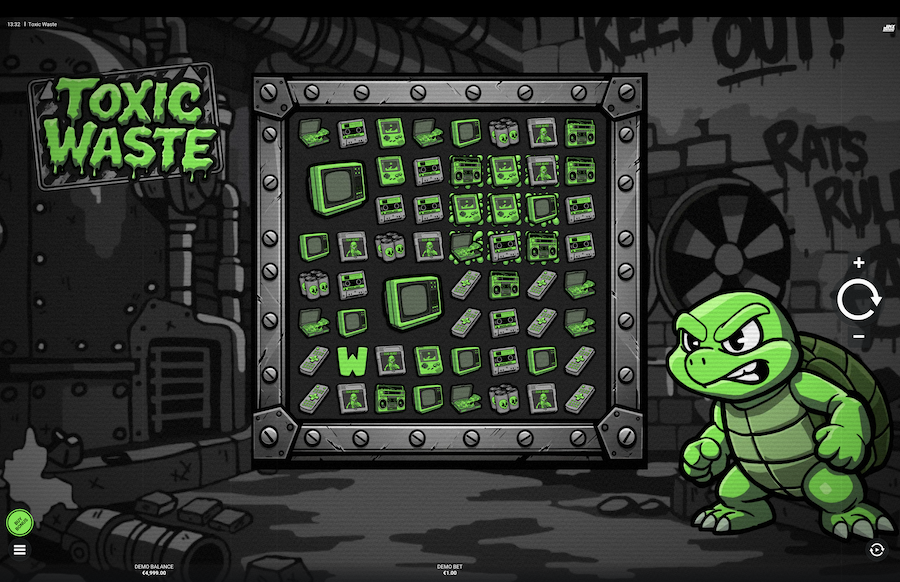
1. AI ads. I recorded and cut some Toxic Waste gameplay, wrote a script, paid a bloke on Fiverr $35 to do the voice, and had our audio guys mix it together. It banged. It had personality, and you could actually see the game we were selling. Remember those painted movie posters from the ’80s? Advertising could be a piece of art in its own right. Now we’ve got all these tools and somehow everything’s starting to look the same. Or worse, the advert looks absolutely nothing like the game. I’d love to see more ads where someone’s clearly had an idea beyond “generate something epic”.
2. Calling everything innovative. I’ve seen studios reskin someone else’s game and then call it innovative in the marketing. ‘Innovative’ has a meaning. For the love of God, use it appropriately. You can make a good game using familiar mechanics. Just tell me what’s good about it without pretending you invented fire.
3. Zeus. Specifically Zeus standing in front of a temple. Zeus in the clouds. Zeus with glowing eyes. Zeus looking like he’s about to tell me which protein powder he uses.
4. Saying Zeus is the problem. He’s no more the problem than Thor, Ra or pyramids. It’s how shallowly those themes keep getting used.
And I’m not having a go at the originals that started a trend. Someone had to make those first. Maybe by release seven we can have a conversation. But when Unknown Studio 72 announces God King of Olympus, I do wonder: why this one? I understand the algorithms. I understand familiar themes sell. But what have you brought to it?
So it’s not Zeus (sorry fella), it’s how studios have used Zeus that is the issue.
5. Edgy as a formula. This one is more a word of warning than a complaint. You can be thought-provoking. You can be absurdist. You can do what you want to do. But there are a lot of new studios fighting to get a piece of the same pie now.
And I think this market is really fighting for attention, going for the shock value, and some of it might be starting to get a bit too political, sometimes, and I wouldn’t be surprised if some of the decisions they are making now have an impact on regulation further down the line.
Not saying whether that should or shouldn’t be the case either. Just really think it will be whether you like it or not, agree with it or not.
There is more that I like to complain about – so if your readers would like to have my moody face pop up on their timeline to have a whinge every now and then, they can feel free to follow me there.